- Open:Weekdays: 8:30 am – 5:30 pm, Saturdays: 9:00 am-2:00 pm
- Email: info@youdrugmart.com
- Follow:
-

-


According to recent reports, Ontario witnessed a sudden Legionnaires disease outbreak in Ontario, with more than 12 cases already reported that are locally clustered. However, healthcare providers agree that although Legionella bacteria and common Legionella pneumonia remain a serious concern, it is still a preventable form of pneumonia, and understanding the basics of this disease is essential for Legionnaires disease prevention. In this blog, we will delve into Legionella symptoms, Legionnaires’ disease prevention, and what we can do, collectively or individually, to prevent Legionella in water from growing.

Legionnaires disease or Legionella pneumonia, is a severe lung infection caused by Legionella bacteria, AKA Legionella pneumophila. These bacteria thrive in warm, stagnant water. Because they spread through inhaled droplets, they pose a risk wherever water systems create mist or aerosol.
Health Canada explains that Legionella exists naturally in freshwater but becomes dangerous when it multiplies in man‑made systems such as cooling towers, HVAC systems, hot tubs, decorative fountains, and large plumbing networks. Although most people exposed do not get sick, those who do can develop life‑threatening pneumonia.
Because Legionella spreads only through water droplets, not through person‑to‑person contact, prevention focuses on water-system safety rather than isolation or respiratory precautions.
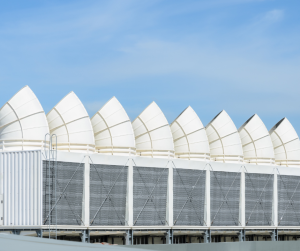
Legionella grows best in warm water between 20°C and 50°C. When conditions allow it to multiply, the bacteria can enter building systems and spread through mist. As a result, Legionella in water becomes the primary source of common Legionella pneumonia.
As discussed earluer, Legionella can grow in man-made water systems such as cooling towers, hot tubs, decorative fountains, and large plumbing networks.
Public Health Ontario warns that people who inhale contaminated droplets from showers, humidifiers, cooling towers, or HVAC systems can catch Legionella disease. Because the lungs receive these droplets directly, the bacteria can settle deep in the respiratory tract and cause the infection. Additionally, swallowing water “down the wrong pipe” can, in rare cases, can also cause infection.

Recognizing Legionella symptoms early helps reduce complications. Symptoms usually appear 2–10 days after exposure, although some cases take longer.
Common Legionella symptoms include:
It is important to note that Legionella pneumonia symptoms resemble other pneumonias. However, Legionnaires disease often progresses faster. Because of this, Health Canada recommends immediate medical attention when symptoms appear after exposure to aerosolized water sources.

A Legionnaires disease outbreak occurs when two or more cases are linked to the same water source. Outbreaks often involve stagnant water sources like cooling towers, HVACs, large plumbing systems, or industrial water systems. Because the lungs receive these droplets directly, the bacteria can settle deep in the respiratory tract and cause infection.
On average, Canada reports about 100 documented Legionnaires disease cases every year. However, the actual number may be higher. This is because many people usually mistake them for regular pneumonia and skip the Legionella bacteria test.
Because Legionella thrives in warm weather, outbreaks often appear in late summer or early fall.
Quebec witnessed a significant Legionnaires disease outbreak in 2012, when 13 deaths and 170 documented cases were reported in the province from a cooling tower in a building. Likewise, Calgary reported eight cases of this disease in the same year, linked to a construction site water spray.
Cases continue to rise, as Ontario reported 354 cases and 26 deaths in 2024, and the province also confirmed multiple Legionnaires disease outbreak in both 2025 and 2026. In may 2026, CTV News reported a Toronto outbreak in which public health officials confirmed multiple cases linked to a localized water source. Additionally, Hamilton also reported a “cluster” of 13 confirmed legionellosis cases last week in the city’s east end and in Stoney Creek.
Although Legionnaires disease outbreaks are rare, they require rapid action to avoid severe illness in vulnerable groups.

Winnipeg’s cold climate limits Legionella growth in winter, yet the underlying risk persists. In 2016, a cancer unit at Victoria General Hospital detected Legionella bacteria, but officials assessed the risk to patients as low and did not declare an outbreak. Because Legionella thrives in warm, stagnant water, any building with complex water systems can experience bacterial growth if maintenance lapses.
Winnipeg buildings with the following features carry a higher risk:
Although Winnipeg has not reported a major Legionella pneumonia outbreak recently, the risk remains, as Legionella continues to be detected in building water systems across Canada. Public health agencies emphasize that prevention depends on maintenance rather than climate alone.
Health Canada, the National Research Council of Canada, the Public Health Agency of Canada, Public Services and Procurement Canada, and the Treasury Board of Canada Secretariat all play active roles in reducing the risks associated with Legionella‑related disease outbreaks. These federal bodies share guidelines that help organizations, construction companies, and individuals manage water systems safely and prevent Legionella growth.
Effective Legionnaires disease prevention focuses on controlling Legionella in water. Prevention requires consistent monitoring and ensuring water safety.
Health Canada and Public Health Ontario recommend:
These steps reduce bacterial growth and prevent aerosolized spread.
Although most outbreaks involve large systems, homeowners can still reduce risk by:
Clinicians use azithromycin, doxycycline, or levofloxacin as first‑line antibiotics to treat Legionnaires disease and common Legionella pneumonia. However, they can also recommend fluoroquinolones for severe cases. All of them are prescription medications and are not available over the counter.
Because these medications treat serious infections, clinicians must assess symptoms, confirm the diagnosis, and choose the safest option based on age, kidney function, other medications, and the severity of Legionella symptoms.
The medications mentioned above usually treat immunocompetent patients for 10–14 days. However, doctors may also extend therapy to 21 days for immunocompromised patients, since Legionella bacteria can cause more persistent illness in vulnerable groups. Nevertheless, with timely and appropriate antibiotics, clinicians usually resolve 95–99% of the Legionella symptoms.
Although anyone can get Legionnaires disease, certain groups face a higher risk of Legionella symptoms. According to Health Canada, vulnerable populations include:
Because these groups experience more severe Legionella symptoms, early detection and rapid treatment remain essential.
Health Canada provides national guidance on managing Legionella symptoms, outbreak response, and laboratory testing for Legionella bacteria. Their recommendations include:
The Public Health Agency of Canada also maintains pathogen safety data sheets for Legionella pneumonia/ Legionella bacteria, outlining laboratory risks and biosafety requirements.
Although Legionnaires disease remains uncommon in Winnipeg, outbreaks can cause severe illness. Because Legionella bacteria thrive in water systems across Canada, awareness helps communities prevent infections before they occur.
Transitioning to stronger prevention practices protects vulnerable populations and reduces the likelihood of outbreaks in cities like Winnipeg. As buildings age and water systems become more complex, proactive maintenance becomes even more important.
In conclusion, legionnaires disease is preventable, yet it requires consistent attention to water system safety. With proper maintenance, early detection, and strong public health response, communities can stay safe and prevent future outbreaks of Legionnaires disease. If you belong to a vulnerable group, speak to us for more guidance, or book an appointment with our doctors at Express Medical Care.