- Open:Weekdays: 8:30 am – 5:30 pm, Saturdays: 9:00 am-2:00 pm
- Email: info@youdrugmart.com
- Follow:
-

-


The A(H3N2) Superflu is spreading across many Canadian communities, and people want clear guidance on how to stay safe this season. This A(H3N2) variant moves fast, and it affects many families in ways that feel stronger than a typical flu. Because the symptoms escalate quickly, early awareness helps everyone stay prepared. You Drug Mart supports this effort with friendly guidance, trusted information, and easy access to essential flu‑season products.
The A(H3N2) Superflu is a mutated influenza strain that spreads more easily than many seasonal flu types. Although influenza changes often, this A(H3N2) variant shows a faster transmission pattern. Additionally, it affects vulnerable groups more severely, which increases concern among families and caregivers.
This strain behaves differently from common flu viruses because it attaches more effectively to respiratory cells. Moreover, it produces stronger symptoms that last longer for many people. Families notice deeper fatigue, harsher coughs, and more intense fevers. Because these symptoms appear quickly, early recognition matters. We encourage people to monitor symptoms closely and stay alert during peak flu weeks.
Influenza viruses mutate as they circulate, and the A(H3N2) Superflu followed this natural pattern. Although mutations happen often, this strain changed in ways that increased its ability to spread. Additionally, global travel and crowded indoor settings helped the virus move faster.
Experts believe that several small genetic shifts created a stronger version of the virus. Moreover, these shifts allowed the strain to bypass some immune responses. This means people who have had flu recently may still get sick again. Because the virus adapts quickly, health professionals continue to monitor its behaviour.
People infected with the A(H3N2) Superflu report symptoms that feel more intense than a typical flu. Many people experience sudden fever, deep muscle aches, and a persistent cough. Additionally, some report chills, headaches, and extreme tiredness. These symptoms usually appear within two days of exposure, which makes the virus harder to contain.
Because this strain affects the respiratory system strongly, some people develop shortness of breath or chest discomfort. Moreover, these symptoms may last longer than expected. Families should watch for worsening signs and seek medical guidance when needed.
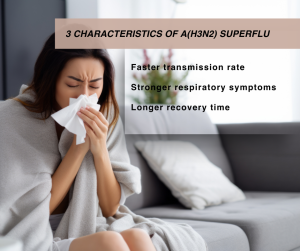
The A(H3N2) Superflu differs from common influenza in several important ways. It spreads faster, and causes more severe symptoms in vulnerable groups. Families notice that recovery takes longer, and fatigue lingers even after other symptoms fade. Because of the mutation, it also evades some natural immunity.
Moreover, this strain increases the risk of secondary infections such as pneumonia. These complications highlight the importance of early care and proper symptom management. Our team will be happy to offer clear guidance and easy access to essential flu‑season supplies.
The faster transmission rate means the A(H3N2) variant spreads quickly in indoor spaces. Moreover, it moves easily through droplets when people cough or talk. This pattern increases the number of cases in a short time.
The stronger respiratory symptoms appear because the virus attaches more effectively to airway cells. Many people report deeper coughs and more intense chest discomfort. Additionally, these symptoms last longer than those linked to common flu strains.
The higher risk for vulnerable groups includes seniors, young children, pregnant individuals, and people with chronic conditions. Moreover, these groups experience complications more often.
The longer recovery time reflects the strain’s impact on the immune system. Many people feel tired for days after the fever ends. Additionally, some experience lingering coughs.
People should get vaccinated early because the flu shot reduces severe illness. Although the vaccine may not perfectly match the mutated strain, it still offers strong protection. Moreover, it lowers the risk of hospitalization.
Wearing masks in crowded indoor spaces helps reduce exposure to droplets. Additionally, masks protect vulnerable family members. Because the A(H3N2) Superflu spreads quickly, masks add an important layer of defense. Speak to our team for comfortable mask options if you see these symptoms.
Frequent handwashing removes viral particles from surfaces. Moreover, clean hands reduce the chance of infection after touching shared items. Soap and water remain the best method, although sanitizers also help.
Improving indoor ventilation lowers the concentration of airborne particles. Additionally, it helps reduce transmission in homes and workplaces. Opening windows or using air purifiers makes a meaningful difference.
Staying home when sick prevents further spread of the A(H3N2) variant. Moreover, it protects vulnerable people in your community. Because symptoms appear quickly, early isolation matters.
Pharmacies play an important role during flu season by offering accessible support. Although pharmacies cannot diagnose influenza, they provide helpful guidance for symptom relief caused by the A(H3N2) variant. Additionally, they offer trusted OTC products that ease discomfort, as well as flu prevention essentials such as masks and sanitizers.
Moreover, pharmacies help people understand when to seek medical care. This support reduces confusion and helps families act early. Because flu seasons can feel stressful, this guidance brings comfort and clarity.
